
Platinum
Rarer than gold, and currently priced well below it.
Let us delve into platinum
Platinum was unknown to the ancient world in any useful sense. It melts at 1,768 degrees Celsius, far beyond what pre-industrial furnaces could reach, so although South American peoples worked small amounts of native platinum, it could not be refined at scale until the nineteenth century. Spanish colonists who found it mixed with silver called it platina, meaning "little silver", and regarded it as a nuisance.
Once it could be worked, its properties made it valuable quickly. Platinum does not corrode or oxidise at any temperature, resists almost all acids, and is an exceptional catalyst. It became the standard for laboratory equipment, then for industrial catalysis, then for jewellery, and in the twentieth century for emissions control.
Where platinum is used
Autocatalysts are the largest single use, the catalytic converters that clean exhaust gases, particularly in diesel engines. Jewellery is next, especially in China and Japan. Beyond that, platinum is used in chemical and petroleum refining catalysts, laboratory equipment, electrical contacts, glass manufacturing, medical implants and certain cancer drugs. It is also used in hydrogen fuel cells and electrolysers, an area of active industrial development.
How much platinum is there
- World reserves, all platinum-group metals: approximately 76,000 metric tons.
- South Africa's share: approximately 63,000 metric tons, around 83 percent of the world total.
- Annual platinum mine production: roughly 180 metric tons.
For scale: the world mines roughly eighteen times more gold each year than platinum, and around a hundred and forty times more silver. Platinum is a genuinely scarce metal, and its supply is concentrated in a single country to a degree that is unusual for any commodity.
How the two metals
have traded.
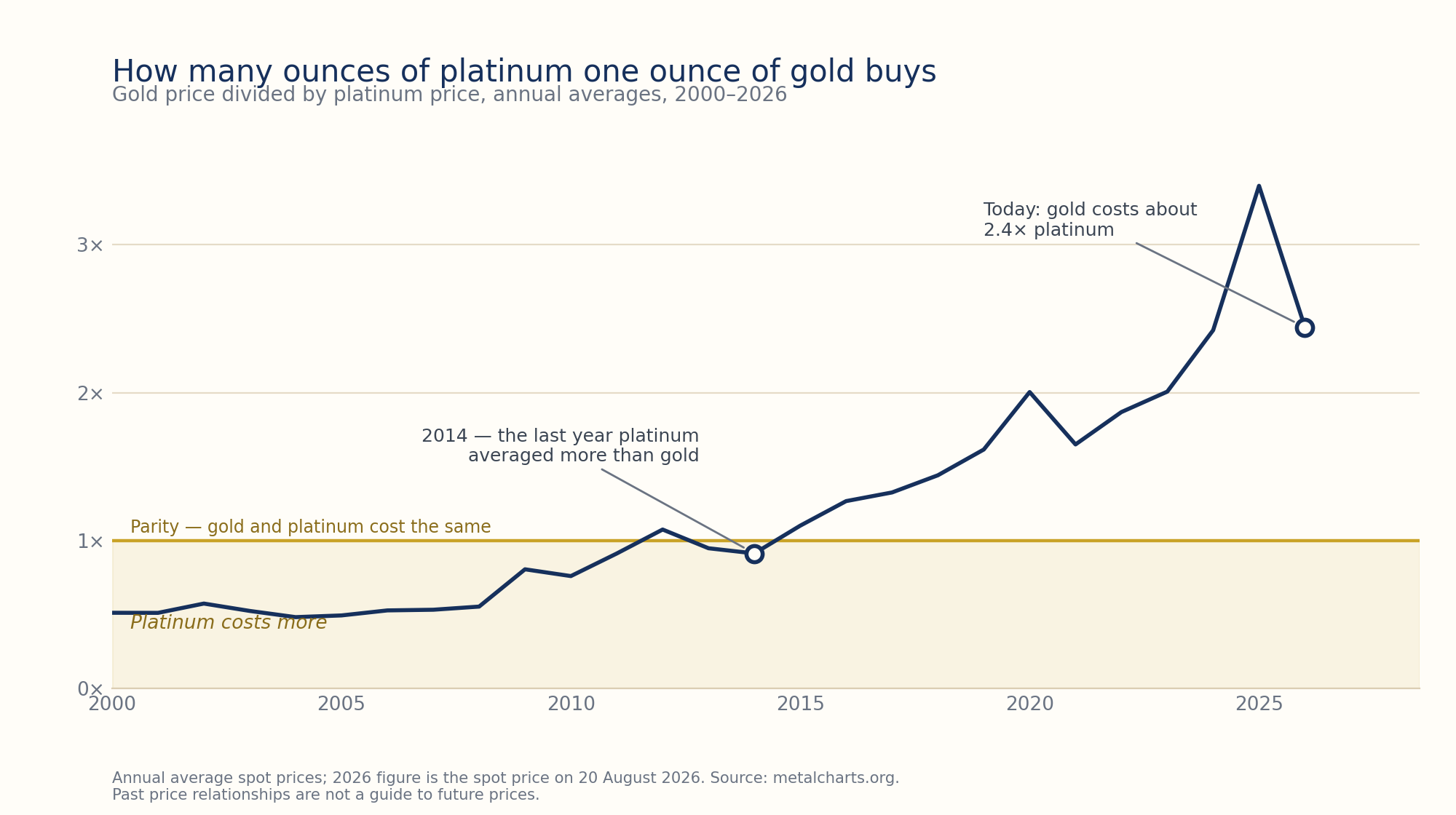
Through the 2000s, platinum was consistently the more expensive metal, often costing roughly twice what gold did. Gold overtook it on annual averages in 2012, platinum briefly recovered, and 2014 was the last year platinum averaged more than gold. It has not been ahead since, and the gap has widened.
Prices move daily. This is a description of where the two metals stand today and how that compares with the historical record. It is not a forecast, and nobody at this firm can tell you where either price is going.
Platinum moves
in long cycles.
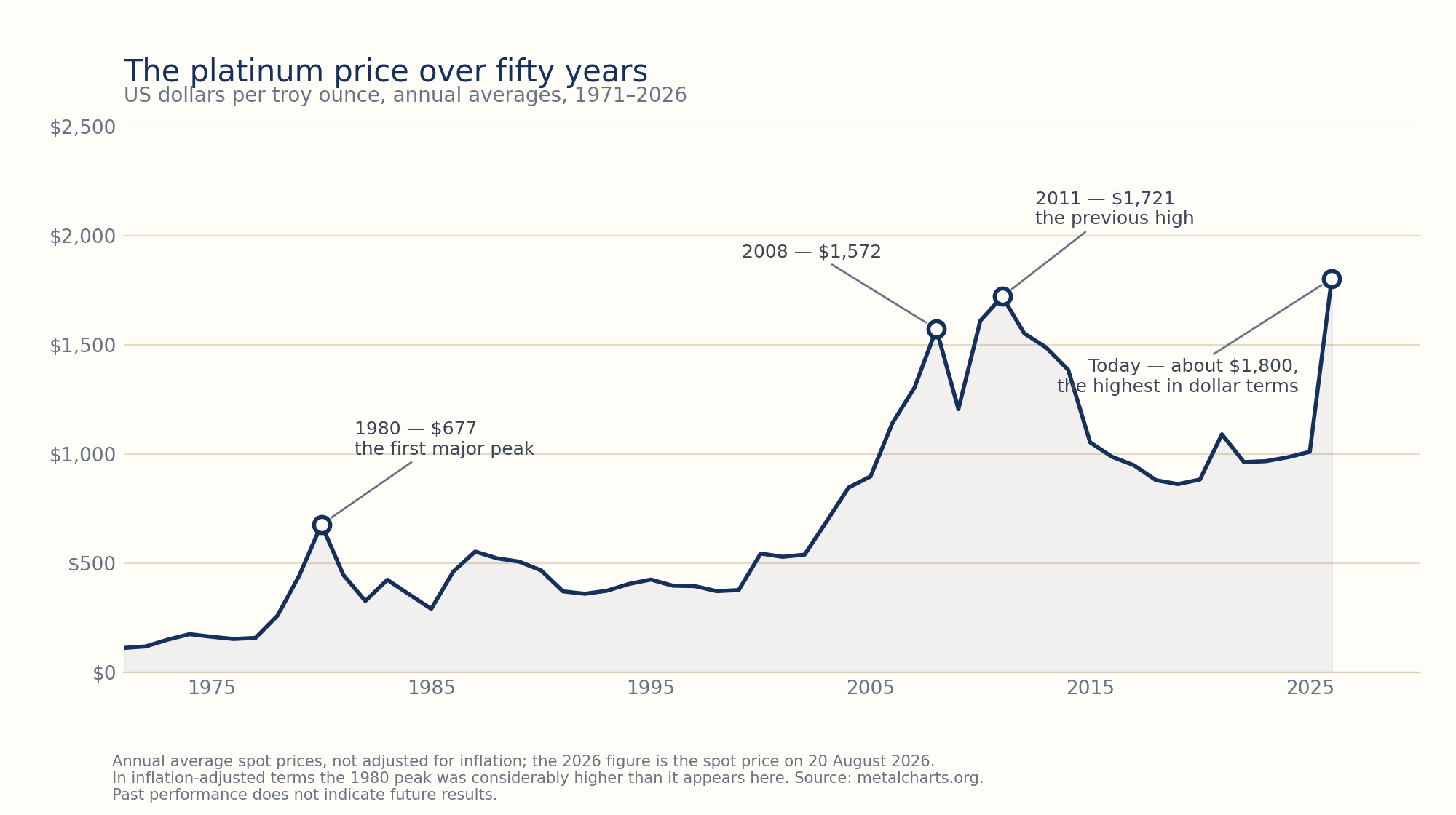
A peak around 1980, a long flat stretch through the 1980s and 1990s, a strong run into 2008 and 2011, then more than a decade below those levels, and a sharp move up recently. Today's price is the highest it has been in dollar terms, though in inflation-adjusted terms the 1980 peak was higher than it looks on the chart.
Past performance does not indicate future results.
The supply deficit
Platinum has been in a structural supply deficit. The World Platinum Investment Council reported a shortfall of roughly 995,000 ounces in 2024 and forecast a further 848,000 ounces in 2025, the third consecutive annual deficit. The gap has been filled by drawing down above-ground stocks, which fell by about 23 percent in 2024 and were forecast to fall a further 25 percent in 2025, to around four months of demand cover.
Two things drive this. Supply is constrained: more than four-fifths of reserves sit in South Africa, where deep mines are expensive to run and power supply has been unreliable, and palladium and platinum come out of the same rock, so producers cannot simply mine more platinum on its own. Demand, meanwhile, has held up across autocatalysts, jewellery and industry.
A deficit is not a price forecast. It is a description of the balance between what is mined and what is used, and it can persist for years or close quickly if either side shifts.
Hydrogen
Platinum is the catalyst in proton exchange membrane fuel cells and in PEM electrolysers, the two technologies at the centre of most green hydrogen plans. If hydrogen scales as an energy carrier, it becomes a new source of platinum demand that did not exist at any meaningful volume before.
The International Energy Agency puts current global hydrogen demand at close to 100 million tonnes a year, almost all of it in refining and chemicals rather than energy. The question is how much of the projected growth comes from PEM technology specifically, since alkaline electrolysers do not use platinum. That is a genuine uncertainty, and forecasts for it vary widely.
What can be said plainly: platinum has an industrial demand story that gold does not have, and it is tied to a sector that is being built out rather than wound down.
The trade-offs
A smaller, less liquid market
Smaller than gold or silver. That can mean wider spreads and more variation in availability.
Supply is concentrated
More than four-fifths of reserves sit in South Africa, so mining disruption or power problems there affect global supply.
Demand is more industrial
Vehicle production and emissions regulation matter to platinum in a way they do not to gold.
Like all physical metals it produces no income, and the price can fall and stay down. It is IRA-eligible at .9995 fine or better. American Platinum Eagles and Canadian Platinum Maple Leafs both qualify.
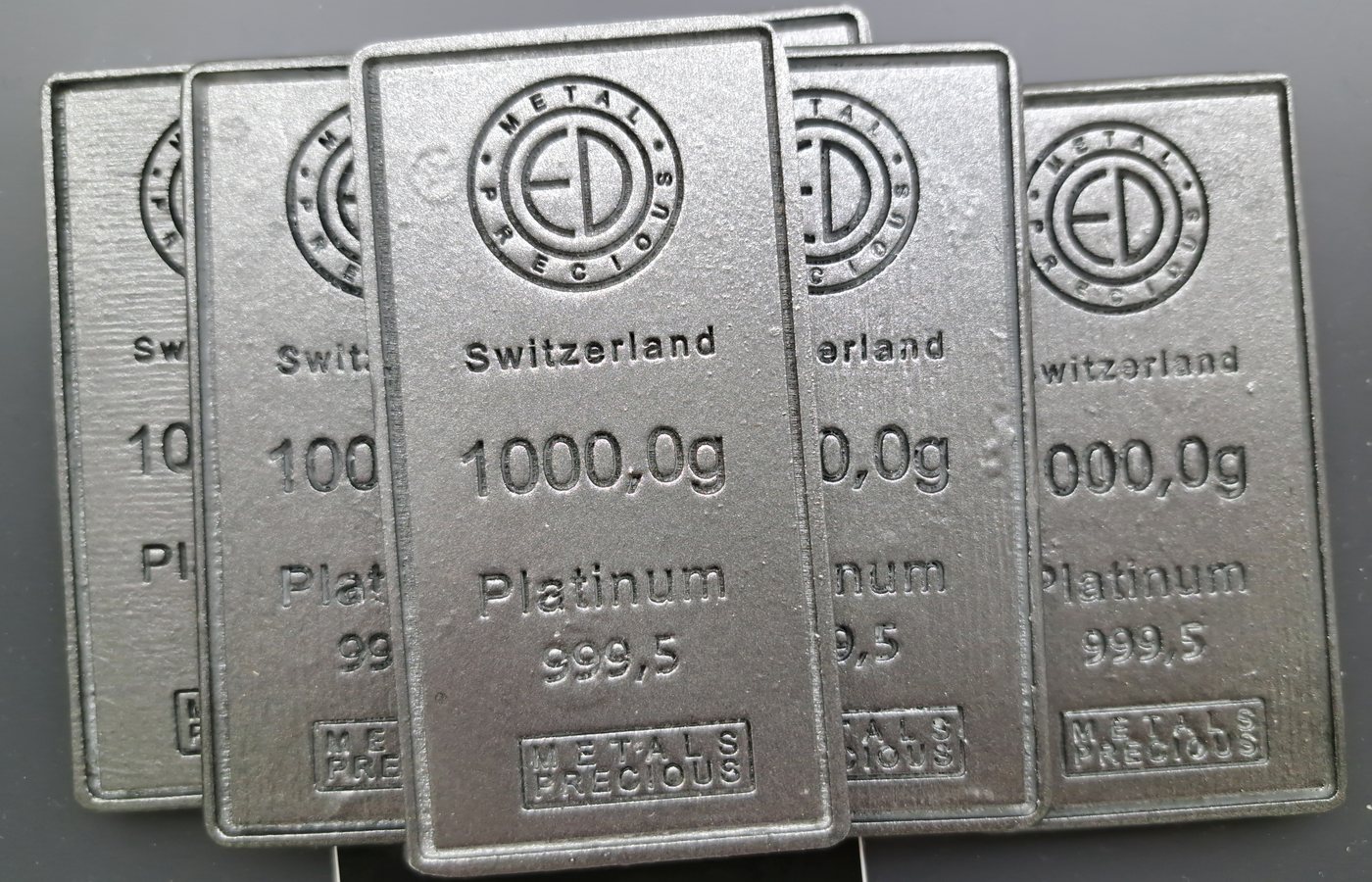
Thinking about platinum inside your IRA?
That is exactly the conversation to have on the phone. We will walk through what it costs and where it fits.