
Palladium
The most industrial of the four, and the most concentrated in supply.
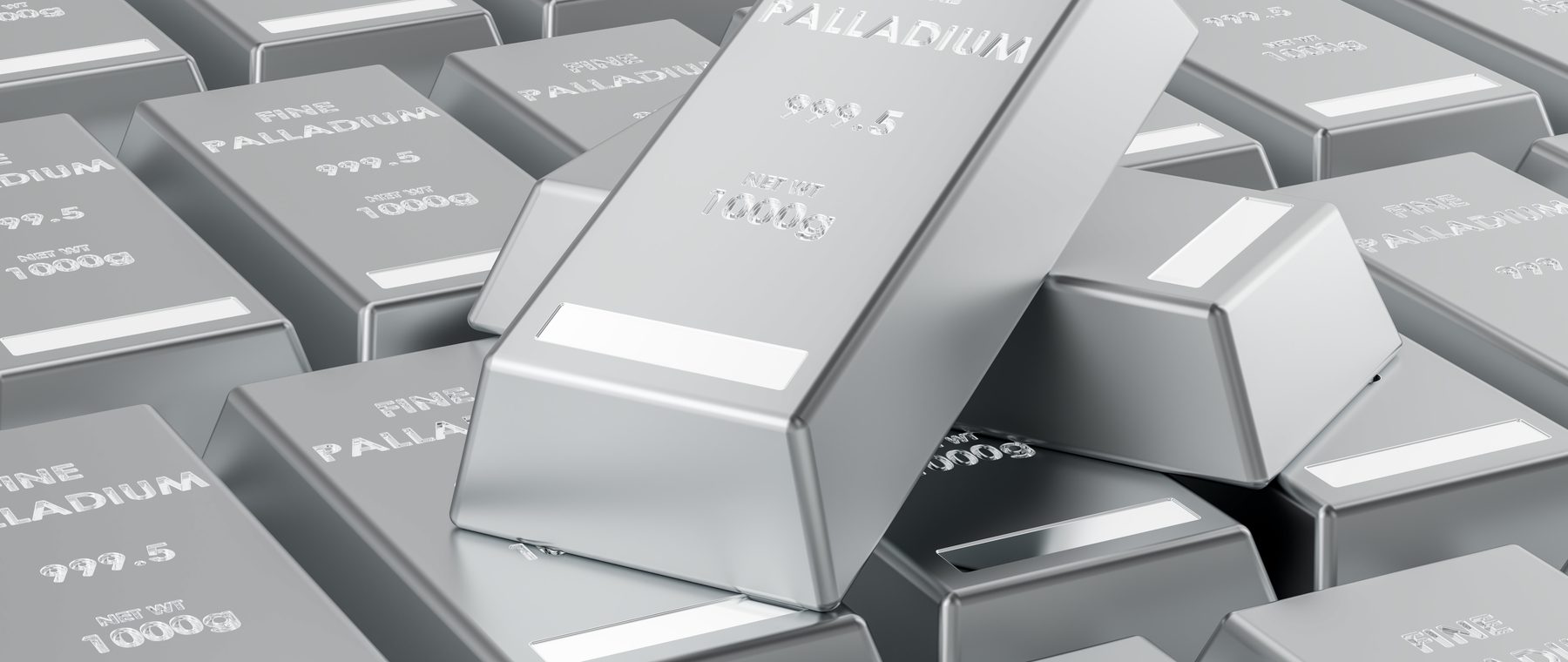
Let us delve into palladium
Palladium was isolated in 1803 by the English chemist William Hyde Wollaston, who named it after Pallas, an asteroid discovered the year before. For most of its history it was a laboratory curiosity and a minor alloying metal, used in dentistry, in white gold, and in electrical contacts.
Its modern importance dates from emissions regulation. Palladium is an exceptional catalyst for oxidising the unburnt hydrocarbons and carbon monoxide in petrol engine exhaust, and as emissions rules tightened from the 1990s onward, demand for it rose sharply. It went from a by-product metal to one that has at times traded above gold.
Palladium is almost never mined on its own. It comes out of the ground alongside platinum in South Africa, and alongside nickel in Russia. That means the supply of palladium is set largely by decisions about other metals, which is one reason its price moves as sharply as it does.
Where palladium is used
Autocatalysts dominate. The large majority of annual palladium demand goes into catalytic converters for petrol and hybrid vehicles. The remainder is spread across electronics (multilayer ceramic capacitors, plating and connectors), dentistry, chemical catalysts, hydrogen purification and jewellery.
This concentration cuts both ways for an investor. It gave palladium a decade of very strong demand as emissions standards tightened worldwide. It also ties palladium's future more tightly to the internal combustion engine than any of the other three metals, and battery electric vehicles do not use it. That is a real, identifiable long-term question over the demand side, and it would be dishonest not to state it plainly.
How much palladium is there
- World reserves, all platinum-group metals: approximately 76,000 metric tons, around 83 percent of it in South Africa.
- Annual palladium mine production: roughly 200 metric tons.
- Largest producers: Russia (approximately 84 metric tons a year, mostly from Norilsk Nickel, the world's largest palladium producer), South Africa (approximately 70), Canada (16), Zimbabwe (15), the United States (6, from the Stillwater complex in Montana).
Between them, Russia and South Africa account for roughly three quarters of the world's annual palladium supply. There is no other precious metal with that degree of concentration in two countries, and it is the single most important thing to understand about the palladium market.
The trade-offs
The smallest, most volatile market
Palladium has moved further and faster than gold, silver or platinum in both directions over the last decade.
Supply risk is real
Geopolitical as much as geological. Two countries supply most of the world.
Demand is overwhelmingly automotive
That has been a strength, and the shift toward battery electric vehicles makes it a long-term question.
Palladium is a by-product, so producers cannot easily increase output on its own, which makes supply slow to respond to price. Like all physical metals it produces no income, and the price can fall and stay down. It is IRA-eligible at .9995 fine or better. Canadian Palladium Maple Leafs and accredited palladium bars both qualify.
Wondering where palladium fits?
We will tell you honestly where it does and does not make sense for your situation.